


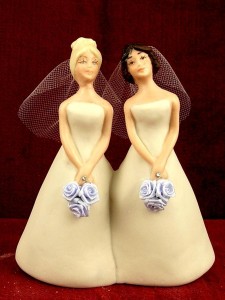
 The Same-sex Marriage Bill in England and Wales completed its passage into law when the Queen gave it her Royal Assent on Wednesday this week. It completed its way through Parliament earlier in the week with little or no opposition in the final stages.
The first same-sex weddings in the UK are expected to take place next summer.
As we enter this new chapter in our society, the most important question is whether we can now find language to talk together about marriage, or simply see a hardening of polarised views.
Accepting Evangelicals continues to encourage theological discussion and prayerful reflection on the nature and historical development of marriage. Some of our members are in favour of same-sex marriage, and some question whether such marriage is theologically possible. It is now more important than ever to keep talking, reflecting and praying together.
During the often heated public debate over the bill however, there have also been many ill-judged claims have been made by groups opposed to it, most relating to the moral damage which would be caused to society if it became law.
In trying to find a way forward, it is important to recognise that many of these claims are either misguided or misleading and could hamper continuing dialogue. Below are some of them.
1. That the introduction of same-sex marriage will devalue marriage for everyone else.
My marriage to my wife is just the same this week, as it was last week. It is enriched or devalued by the value and commitment we attach to our love and the marriage vows we made before God, not to whether gay people are allowed to get married. This claim is clearly not true.
2. That same-sex marriage will unpick the moral fabric of society.
This is an impossible claim to defend. How can marriage vows of lifelong commitment between two people do anything but strengthen the stability of their relationship, and thereby, society as a whole? David Cameron stated publicly that his support for same-sex marriage was because of Conservative principles not in spite of them, coming out of a desire to strengthen society.
3. That same-sex partnerships are inherently unstable and do not last.
Both the anecdotal evidence of those in relationships of many years and statistical evidence from here and other countries clearly show this to be false. Civil Partnerships are proving more enduring than marriages in many countries and there is no reason to believe that enabling same-sex couples to marry will weaken this in any way.
4. That Churches will be forced by law to conduct marriage services for same-sex couples.
The Government has bent over backwards to put in place the ‘triple-lock’ of protections for religious freedom. No church will be forced to conduct same-sex marriages, and for the Church of England it will be illegal for same-sex marriages to be conducted in churches unless and until the CofE asks for the law to be changed.
5. That the parliamentary process was undemocratic.
In a free vote for MPs for all three major parties, the bill was passed by a two thirds majority. In the House of Lords the vote was also 2 to 1 in favour after a very full and lengthy debate with every view being expressed. Most polls also show public opinion is now in favour of same-sex marriage. As a result it is arguable that this has been the most democratic bill which has passed through Parliament in recent years.
In moving on from this point in a way which seeks deeper understanding about the nature of marriage, I believe that we need to move beyond these banner grabbing and misleading statements, and look at the meaning, Biblical history and theology of marriage itself if we are to come together in any meaningful way. Biblical interpretation of the account of Adam and Eve, historical development in the Bible and since, and theological reflection on the metaphor of the Church as the Bride of Christ should be our focus as we continue to journey together.
At the same time, it also has to be recognised that the Bill does not give many gay Christians what they really want. One lesbian Christian said to me recently that the same-sex marriage bill will make very little difference to her and her partner, because when they celebrated their Civil Partnership, they could not celebrate it in church, and even with same-sex marriage, they will not be able to celebrate their marriage in their church. It is celebrating their partnership in church before God which is most important to them, and that will still be denied them. The task of finding a way to celebrate faithful committed same-sex partnerships in church must never be far from our mind.
Over the months ahead, before the first same-sex wedding in the UK, we would do well to recognise the valid aspirations of those who want to be married and the genuine concerns of others. Only then will we all find a way to celebrate the love which brings couples to want to be joined in marriage while never discounting those for whom this still throws up theological questions and problems.
Benny Hazlehurst
